How to Find the Right Heels — Indian Woman's Complete Guide

A step-by-step guide for Indian women to find the perfect heels. Learn about heel types, foot shape compatibility, occasion-based recommendations, and a simple at-home measurement test for comfort and style.
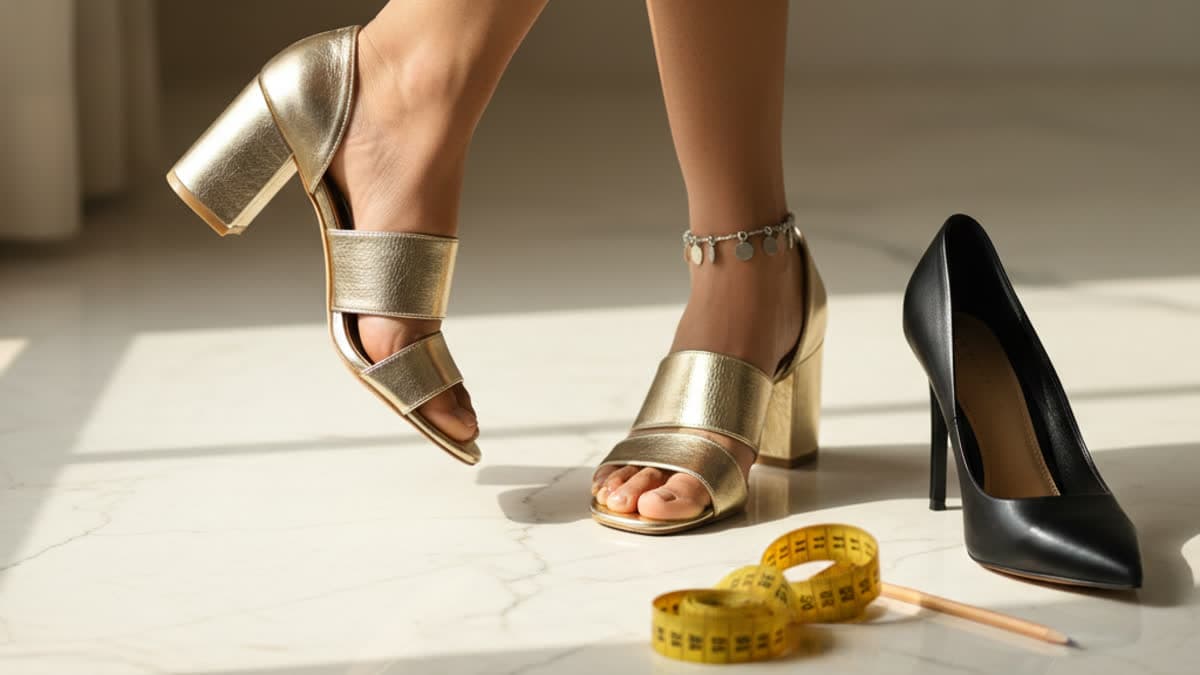
You spot them in the store window — gorgeous heels that would go perfectly with your new saree or that Friday office look. You buy them, wear them once, and by hour two your feet are screaming. The shoes go to the back of the cupboard, and you reach for your trusted flats again. If this cycle feels familiar, learning how to find the right heels for Indian women is the styling skill that will change everything — because beautiful shoes you cannot wear are not really beautiful at all.
Most Indian women shop for heels the wrong way. We fall for the design, the glitter, the discount tag, and completely ignore whether the shoe actually works for our foot shape, our daily routine, or the outfits we wear most. A stiletto that looks stunning on a mannequin might be torture on Indian roads, and that bargain pair from the sale rack might cost you far more in physiotherapy bills later.
This guide gives you a simple, reliable system to find heels that look elegant and feel comfortable — no apps, no expensive fittings, no confusing jargon. Just practical steps you can do at home, specific recommendations for Indian outfits and occasions, and the confidence to finally build a heel collection you actually wear.
Why Finding the Right Heels Matters for Indian Women
Indian women come in every shape and size, and so do our feet. From narrower North Indian feet to wider South Indian feet, from flat feet common in many Indian women to high arches that need extra cushioning, the diversity is real. Add to that the fact that we navigate everything from uneven colony roads and crowded metros to marble wedding halls and office corridors — your heels need to work harder here than almost anywhere else.
Knowing how to choose the right heel answers the everyday questions that slow down your mornings. Which shoes for a six-hour wedding? What works with a Kanjeevaram saree without sinking into grass? Can you survive a full day at work in three-inch heels? Once you understand your foot and your lifestyle, these decisions become effortless.
The 6 Main Types of Heels — Quick Overview
Before we get into measurements, let us look at the heel types you will find in Indian stores. A quality pair from Bata or Metro typically ranges from ₹1,200 to ₹2,500, while Aldo and Charles & Keith sit in the ₹3,000 to ₹6,000 bracket. Each heel type has a different personality, comfort level, and best use case.
- Stiletto: The classic thin heel, usually 3 inches or higher. Elegant and leg-lengthening, but the least comfortable for long hours. Best for short events and experienced wearers.
- Block Heel: A thick, sturdy heel with a wide base. The most comfortable option for Indian women who walk on uneven surfaces. Perfect for office, weddings, and daily wear.
- Wedge: A heel that runs under the entire foot from back to front. Offers maximum stability and weight distribution. Ideal for outdoor events, college wear, and pairing with kurtis.
- Kitten Heel: A short, slender heel between 1 to 2 inches. Feminine and comfortable enough for all-day wear. Excellent for office meetings and formal Indian gatherings.
- Platform: A thick sole at the front with a heel at the back. Reduces the effective heel height and adds cushioning. Great for parties and festive wear where you want height without the strain.
- Cone Heel: A heel that is wide at the top and narrow at the bottom, shaped like an ice cream cone. Offers more stability than a stiletto while keeping a dressy look. Works beautifully with lehengas and gowns.
How to Find Your Perfect Heel Height at Home — Step by Step
This is the part most online articles skip — actually measuring what your body can handle. You do not need a shoe expert. You need ten minutes, a wall, and a measuring tape.
What You Need
- A measuring tape or ruler
- A blank sheet of paper larger than your foot
- A pencil
- A flat wall or door frame
The Measurements
- 1Trace your foot: Place the paper against the wall. Stand on it with your heel touching the wall. Trace around your foot while holding the pencil straight up. Do this for both feet — most women have one foot slightly larger.
- 2Measure foot length: Measure from the wall (heel) to the longest toe. This tells you your true shoe size, which many Indian women get wrong by not accounting for width.
- 3Measure foot width: Find the widest part of your traced foot and measure across. If this is more than 9.5 cm for a size 6, you likely need wide-fit heels.
- 4Find your ideal heel height: Sit with your leg extended and feet relaxed. Measure from your heel to the ball of your foot along the arch. Multiply this by 0.22. The result is your biomechanically ideal heel height in centimetres — the height where your foot experiences the least strain.
Always shop for heels in the evening when your feet are slightly swollen from daily activity. This prevents buying shoes that feel fine in the morning but pinch by afternoon.
Reading Your Results
Want Shoes That Look Good AND Feel Comfortable?
Get personalised heel recommendations for your foot shape, lifestyle, and favourite outfits.
Here is how to translate your numbers and observations into smart shopping decisions.
- Foot length over 25 cm: You need a larger size than most Indian stores stock. Look at Aldo, Charles & Keith, or online brands that carry size 8 and above.
- Wide feet (over 9.5 cm width): Avoid pointed toes and narrow stilettos. Block heels, wedges, and peep-toes with adjustable straps are your best friends.
- Flat feet or low arch: You need heels with built-in arch support or add orthotic insoles. Avoid completely flat soles. Platforms and block heels work better than stilettos.
- High arch: Your foot does not distribute weight evenly. Look for cushioned insoles and heels with a slight platform to reduce pressure on the ball of the foot.
- Ideal heel height under 4 cm: Stick to kitten heels, low block heels, and flats with a slight lift. Your foot structure is not built for high heels, and forcing it will cause long-term damage.
If you have never measured your foot width before, do it today. Over 60 percent of Indian women wear the wrong shoe width, not just the wrong length, and that is why heels hurt.
Best Heel Height for Each Occasion
This is where we connect the theory to your real life. Indian women move between many worlds — the office, the wedding hall, the market, the festival ground. Here is what works where, including the best heels for saree wear and other Indian outfits, keeping both comfort and style in mind.
- Office (8–10 hours): Low block heels or kitten heels between 1 to 2 inches. Closed-toe styles from Bata or Metro in black, tan, or nude pair effortlessly with trousers, suits, or long kurtis. Your feet need to survive the commute and the meeting room.
- Wedding (4–6 hours): Mid to high block heels or wedges between 2 to 3.5 inches. Avoid stilettos on grass or uneven wedding venues. Gold, bronze, or embellished block heels work beautifully with silk sarees and lehengas. Carry foldable flats in your clutch for the late hours.
- Daily wear and errands: Flat sandals with a slight heel (0.5 to 1 inch) or low wedges. Comfort is non-negotiable here. Kolhapuris, slip-on block heels, or cushioned flats from Indian brands are ideal with cotton salwars and casual kurtis.
- Festive occasions (Diwali, Eid, Pujas): Platform heels or cone heels between 2 to 3 inches. These give you height for long outfits without the wobble. Pair with Kanjeevaram sarees, anarkalis, or Indo-western dresses. Look for metallic finishes or mirror work details.
- Date night or dinner: Mid-height stilettos or cone heels between 2 to 3 inches. Since you are mostly sitting, you can afford something dressier. Pair with cocktail dresses, jumpsuits, or fitted kurtis with cigarette pants.
Heel Styles That Actually Suit Your Foot Shape
- Wide feet: Look for round-toe or almond-toe block heels and wedges. Avoid narrow stilettos and pointed pumps. Brands like Mochi and Bata often have wider Indian fits. Prioritise adjustable straps or slip-on styles that do not squeeze the forefoot.
- Narrow feet: You can wear pointed-toe stilettos and sleek pumps that wider feet cannot. But avoid loose-fitting mules or backless heels that slip off. Look for styles with ankle straps for security.
- High arch: Your foot needs cushioning under the ball and the heel. Platform heels, cone heels with padded insoles, and wedges work best. Add gel inserts if needed. Avoid completely flat-front shoes.
- Flat feet or low arch: You need structure and support. Block heels with built-in arch support, wedges, and heels with a contoured footbed are essential. Avoid very high stilettos that force your arch into an unnatural curve. Consider orthotic inserts available at most Indian pharmacies.
Common Mistakes That Ruin Your Heel Experience
Even with the right information, it is easy to fall into habits that ruin the heel experience. Here are the mistakes we see most often at Divas Club.
- Buying for looks, not fit: That display pair might be stunning, but if the toe box pinches or the heel slips, it will never work. Fit comes first. Always.
- Ignoring arch support: Indian women often have flatter arches than Western sizing accounts for. A heel with zero arch support will damage your feet over time.
- Wearing the wrong size: Too many women squeeze into a smaller size thinking the shoe will stretch. Leather gives a little; synthetic does not. Buy the size that fits the larger foot.
- Skipping the break-in period: Never wear new heels to a full-day event. Wear them at home for 30 minutes daily for a week. Use a hairdryer on low heat to soften stiff areas slightly before the first long wear.
“I used to buy every beautiful heel I saw and suffer through weddings with bandaged feet. After understanding my wide feet and low arch, I switched to block heels with insoles. Last month I wore heels through my cousin's entire wedding day — from the morning rituals to the midnight DJ — without a single blister. It felt like a superpower.”
What to Do After You Know Your Perfect Heel
Knowing your ideal heel height, foot shape needs, and occasion requirements is just the beginning. The real magic happens when you start applying this knowledge to your everyday wardrobe and building a shoe collection that works as hard as you do.
If you want someone to do the hard work for you, the Divas Club Daily Styling package takes everything we covered here — your foot shape, your lifestyle, your favourite outfits — and turns it into a complete footwear and outfit roadmap. For just ₹1,999, you get personalised heel recommendations for sarees, suits, and western wear, brand suggestions that fit your budget from Bata to Aldo, and a 32-look style guide that includes the right shoes for every occasion. Stop guessing. Start walking comfortably.
Stop Suffering for Style. Have Both.
Personalised footwear recommendations + 32 complete outfits with the right shoes for every occasion.
Get Your Style PlanPersonalised styling by Divas Club
More Style Tips

How to Style Jeans for Indian Women — Beyond the Basics
From office to festivals, jeans can do it all. The complete Indian woman's guide to styling every cut, fit, and wash.

How to Look Expensive on a Budget — Indian Women's Guide
Fit over fashion. Iron over labels. These 8 tricks make a ₹500 outfit look like ₹5,000.

10 Office Wear Outfits Every Indian Woman Needs
Ten outfit formulas that end the morning wardrobe panic forever.